Create Effective Study Summaries with AI: A Step-by-Step Guide
Table of Contents
- Introduction: The Rise of AI in Education
- Why Effective Study Summaries Matter
- How AI Transforms Study Summarization
- Step-by-Step Guide to Creating Effective Study Summaries with AI
- Best AI Tools for Creating Study Summaries
- Best Practices for Using AI to Create Study Summaries
- Common Challenges and How to Overcome Them
- Future Trends: Where is AI in Study Summarization Heading?
- Conclusion: Embrace the AI Advantage in Your Learning Journey
- FAQs
1. Introduction: The Rise of AI in Education
Ever felt like you're drowning in textbooks and notes? We've all been there. But what if I told you there's a way to cut through all that info easily? Say hello to Artificial Intelligence (AI) – your new study buddy that never sleeps!
These days, everyone from students to teachers are turning to AI to make sense of tough stuff, solve problems, and create study summaries. Whether you're cramming for exams or just trying to understand complex ideas, AI tools can be real game-changers.
So, how do you use AI to make great study summaries? That's what we're gonna talk about today. Get ready as we go through a step-by-step guide to turn your study chaos into organized, easy-to-understand summaries with a little help from AI.
2. Why Effective Study Summaries Matter
Let's start with a question: why bother with study summaries? Couldn't we just read everything twice? Well, sure, but where's the fun in that? Good study summaries are like cheat codes – they boil down tons of info into bite-sized chunks, highlighting the important stuff without the fluff.

Think about trying to remember every single detail from a big textbook chapter. Exhausting, right? A well-made summary helps you focus on key ideas, theories, and facts, making revision less stressful and more productive. Plus, it's a great way to reinforce your learning, helping the info stick around longer.
But making these summaries by hand can take forever and, let's be honest, be pretty boring. That's where AI comes in, flipping the script and making the process not just faster but way more efficient.
3. How AI Transforms Study Summarization
So, how exactly does AI change the way we make study summaries? Think of AI as that super-smart friend who can read a book in minutes, pick out the most important points, and explain them to you in simple terms.

AI tools use fancy algorithms and natural language processing (NLP) to analyze your study materials, whether they're text documents, audio lectures, or even math equations. These tools can spot key phrases, cut out unnecessary info, and present the content in an easy-to-understand format.
But it's not just about speed. AI ensures consistency, reduces human error, and can tailor summaries to your specific needs – whether you want a quick overview or a detailed breakdown of complex topics. It's like having a personal teaching assistant ready to help you ace your studies.
4. Step-by-Step Guide to Creating Effective Study Summaries with AI
Now, let's get down to business. Here's your step-by-step guide to creating awesome study summaries using AI.
a. Step 1: Gather Your Study Materials
First things first: get all your stuff together. Whether it's lecture notes, textbooks, articles, or any other study material, having everything in one place sets you up for success. Organize them by subject, topic, or whatever system works for you. Trust me, a little organization now saves tons of time later.
b. Step 2: Choose the Right AI Tool
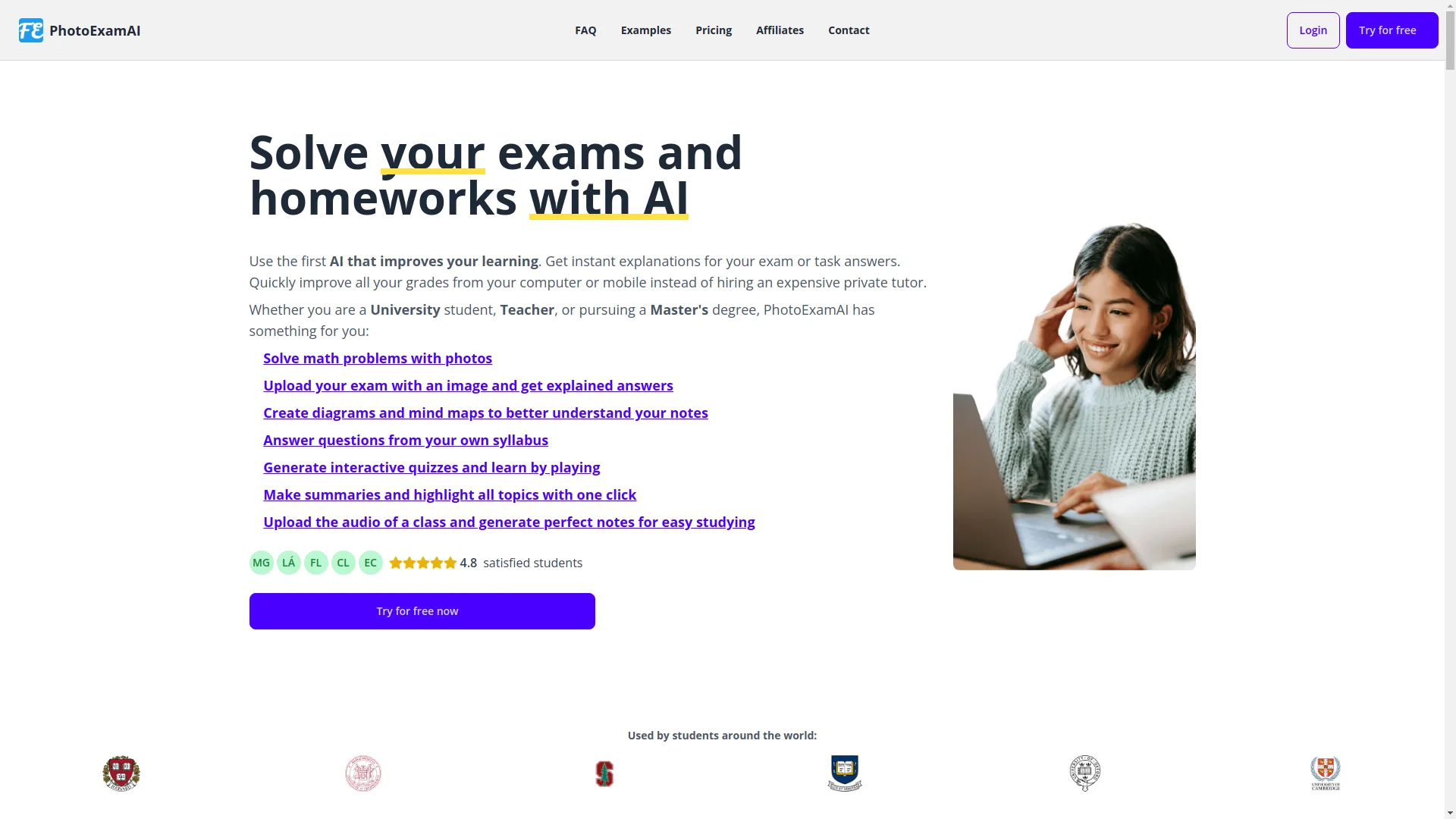
Not all AI tools are the same, so picking the right one for your needs is crucial. Think of it like choosing the right tool for a job – a hammer for nails, a wrench for bolts, you get the idea. PhotoExamAI , for example, is great if you're dealing with math problems or need to create diagrams and mind maps. On the other hand, tools like ChatGPT or Elephas might be better for text-heavy summaries.

Think about things like how easy it is to use, specific features (like supporting multiple languages or working with other apps), and of course, cost. Many tools offer free trials, so don't be afraid to try a few out to see what works best for you.
c. Step 3: Upload or Input Your Materials
Once you've chosen your AI helper, it's time to feed it some information. Most AI tools have simple interfaces where you can upload documents, take photos of handwritten notes, or even record audio lectures. Some platforms, like PhotoExamAI , let you upload photos or screenshots directly from your device, making the process super easy.
Don't worry if you're not great with tech. These tools are designed to be user-friendly, so a few clicks here and there, and you're good to go.
d. Step 4: Customize Your Summary Preferences
Now, here's where you get to make it your own. Depending on the AI tool you're using, you can usually adjust settings to match what you need. Maybe you want a quick overview – just a page or two. Or maybe you need something more detailed, breaking down each section of your study material.
Some tools even let you focus on specific topics or keywords, making sure your summary highlights exactly what you need to know. It's like having a filter that sifts through all the noise and brings out the gold.
e. Step 5: Review and Refine the AI-Generated Summary
Alright, the AI has done its thing, and you have a shiny new summary. But hold up – don't just take it as is. Skim through the summary to make sure it covers all the important points. AI is smart, but it's not perfect. You might need to tweak a few sections or add in some details that the AI might have missed.

Think of the AI-generated summary as a first draft. It's a great starting point, but your personal touch can make it even better.
f. Step 6: Utilize Your Summaries for Enhanced Learning
Boom! You've got your effective study summary. Now make it work for you. Use it to review key concepts, create flashcards, or even generate practice quizzes. Some AI tools, like PhotoExamAI , can help turn your summaries into interactive quizzes, making your study sessions more engaging and fun.

By using these summaries, you're not just passively reading – you're actively engaging with the material, improving your understanding and memory.
5. Best AI Tools for Creating Study Summaries
There are tons of AI tools out there, each with its own set of features. Let's take a look at some of the best ones to consider.
-
PhotoExamAI
If you've got math problems or need to create visual aids like diagrams or mind maps, PhotoExamAI is your go-to. It's versatile, supports multiple languages, and can handle complex equations. Plus, it's easy to use on both computers and mobile devices.
-
ChatGPT
ChatGPT , made by OpenAI, is great for text-based summaries. It's excellent for generating quick overviews or detailed explanations, depending on what you need. Just upload your document, and ChatGPT can help you break down the content easily.
-
Elephas
Made specifically for Mac users, Elephas offers features that boost productivity, including offline functionality and multiple AI models. It's perfect for researchers and serious learners who want a comprehensive tool that fits seamlessly into their workflow.
-
Recast Studio
Great for those dealing with podcasts or YouTube videos, Recast Studio can generate show notes, blog posts, and email summaries automatically. It's a fantastic tool for turning audio content into readable, organized summaries.
-
Sonix
Sonix is another top-notch AI tool that's great at transcribing and summarizing audio and video content. It offers collaborative features, making it ideal for group projects or study sessions.
-
Scholarcy
Perfect for academic research, Scholarcy can turn long texts into interactive summary cards, highlight key points, and export summaries to other applications. It's a must-have for students and researchers looking to streamline their literature reviews.
6. Best Practices for Using AI to Create Study Summaries
To get the most out of AI-powered summarization, keep these best practices in mind:
- Provide Quality Inputs: The better your study materials, the better the summary. Make sure your documents are clear, well-organized, and free of unnecessary clutter.
- Customize Your Settings: Adjust the AI settings to match your specific needs. Whether you need a quick review or an in-depth summary, tweaking the AI preferences can make a big difference.
- Review and Edit: Always skim through the AI-generated summaries to check for accuracy and completeness. Don't rely solely on the AI – your expertise can make the summary even better.
- Use Summaries Actively: Don't just read your summaries passively. Use them to create flashcards, practice quizzes, or discussion topics. Active engagement helps you remember and understand better.
- Stay Organized: Keep your summaries organized by topic, date, or subject. This makes it easier to find and review them when you need to.
- Stay Updated: AI tools are always improving. Keep an eye out for new features or tools that can make your summarization process even better.
7. Common Challenges and How to Overcome Them
Even with the best AI tools, you might run into a few problems along the way. Here are some common challenges and tips to deal with them:
- Accuracy Issues: Sometimes the AI might miss important points or include irrelevant information. To fix this, always review the summaries and adjust them as needed.
- Complex Material: For really technical or complex subjects, AI might struggle to fully grasp the nuances. In these cases, add your own understanding and additional notes to the AI summaries.
- Data Privacy Concerns: Uploading sensitive study materials to AI tools can raise privacy issues. Use tools that prioritize data security and avoid sharing highly confidential information.
- Dependency: Relying too much on AI for summaries might hurt your own comprehension skills. Use AI as a helper, not a replacement, for your active reading and learning.
- Cost Considerations: Many AI tools offer free versions but have advanced features you have to pay for. To manage costs, think about which features you really need and only invest in a premium plan if it offers significant value.
8. Future Trends: Where is AI in Study Summarization Heading?
Hold onto your hats, because AI in education is just getting started! Here's what the future might look like:
-
Personalization
AI tools will get even better at personalizing summaries based on how you learn best. Imagine summaries that not only condense information but also present it in a way that matches your learning style.
-
Integration with Other Educational Tools
Future AI summarizers will work seamlessly with learning management systems, digital textbooks, and other educational platforms, creating a unified, efficient learning ecosystem.
-
Real-Time Summarization
From live lectures to real-time discussions, AI will be able to generate summaries on the spot, giving you instant insights and key takeaways as soon as the information is presented.
-
Multimodal Summarization
AI will easily handle and summarize different types of content at the same time – text, audio, video, and even interactive elements – offering comprehensive overviews no matter the format.
-
Enhanced Interactive Features
Future AI tools might let you interact more dynamically with summaries, like clicking on a point to learn more, asking follow-up questions, or generating related practice exercises.
-
Improved Accuracy and Understanding
As NLP and machine learning get better, AI will be able to understand context better, handle technical jargon, and provide more accurate, nuanced summaries.
9. Conclusion: Embrace the AI Advantage in Your Learning Journey
So there you have it – a deep dive into creating effective study summaries with AI. From picking the right tools to following a step-by-step process, AI is here to make your study sessions smarter and more efficient. Think of AI as your trusty sidekick, always ready to help you tackle those mountains of information easily.

But remember, while AI can do wonders, it's your understanding and engagement that really solidify your learning. Use AI summaries as a starting point to dive deeper into concepts, reinforce your knowledge, and spark your curiosity.
Ready to change the way you study? Jump into the world of AI-powered summaries and watch your grades improve while you get back some free time. After all, who doesn't want to study smarter, not harder?
10. FAQs
Q: Can AI summarize books?
A: You bet! Tools like PhotoExamAI and others can summarize books by analyzing their content and pulling out key points, making it easier for you to grasp the main ideas without reading the whole book.
Q: Can AI replace human summarizers?
A: While AI is super efficient, it's best used alongside human effort. AI can handle lots of material quickly, but human oversight ensures that the summaries are accurate and make sense in context.
Q: How accurate are AI-generated summaries?
A: AI-generated summaries are usually pretty accurate for straightforward content. However, for more complex or nuanced material, it's a good idea to have a human review to make sure nothing important is missed or misunderstood.
Q: Are there any free AI tools for creating study summaries?
A: Yep, many AI tools offer free versions with basic summarization features. PhotoExamAI , for example, lets users use certain features for free with the option to upgrade for more advanced stuff.
Q: How can I make sure my data is secure when using AI tools?
A: Always choose AI tools that take data security seriously and follow strict privacy policies. Look for tools that offer encryption, secure data storage, and clear data usage practices to protect your information.
Personal Anecdote: My Journey with AI Summarization
Let me share a quick story from my own school days. Picture this: It's finals week, and I've got piles of textbooks and notes staring at me like a never-ending mountain. I was desperate for a solution when I stumbled upon PhotoExamAI . Skeptical but hopeful, I decided to give it a shot.

I uploaded my notes, chose the concise summary option, and waited. Within minutes, there it was – a neat, organized summary that highlighted all the key points. It felt like having a study buddy who not only understood the material but could also present it in a way that made sense. My study sessions became more focused, and guess what? My grades got better, and I actually felt less stressed!
This experience was a game-changer, showing me the real potential of AI in changing how we approach studying. It wasn't just about saving time – it was about improving my understanding and making my learning journey more enjoyable.
Final Thoughts
Creating effective study summaries with AI isn't just some futuristic idea – it's happening right now, and it's easier to use than ever. By using advanced tools like PhotoExamAI , ChatGPT, and others, you can streamline your studying process, improve your understanding, and ultimately get better grades without breaking a sweat.

Remember, the key is to use AI as a tool to boost your natural study habits, not replace them. Combine the efficiency of AI with your dedication and curiosity, and you're set for success. So, go ahead – embrace the AI revolution in education and watch as your study habits transform for the better!
By following this comprehensive guide, you not only stay ahead in your studies but also equip yourself with the tools and strategies needed to thrive in an ever-changing educational landscape. Happy studying!